Most shiitake in the world is grown on sawdust blocks. TAKEHISA buys the other kind.
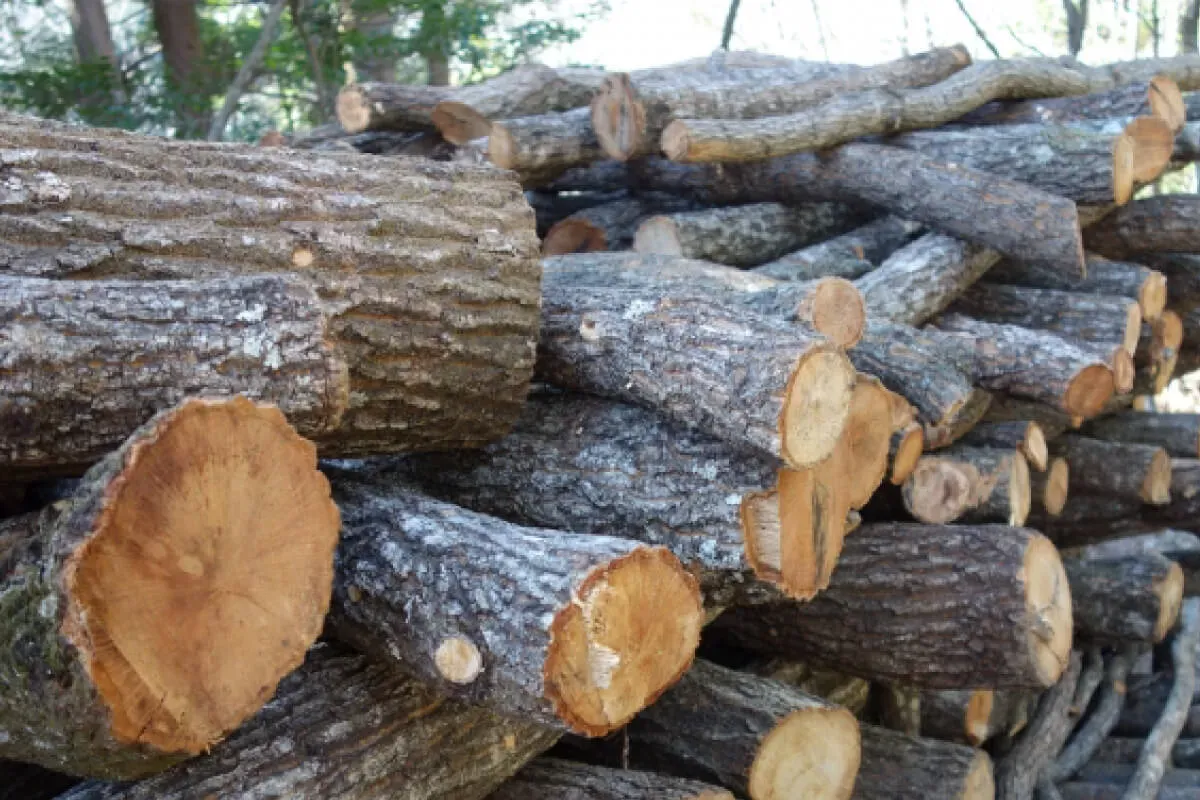
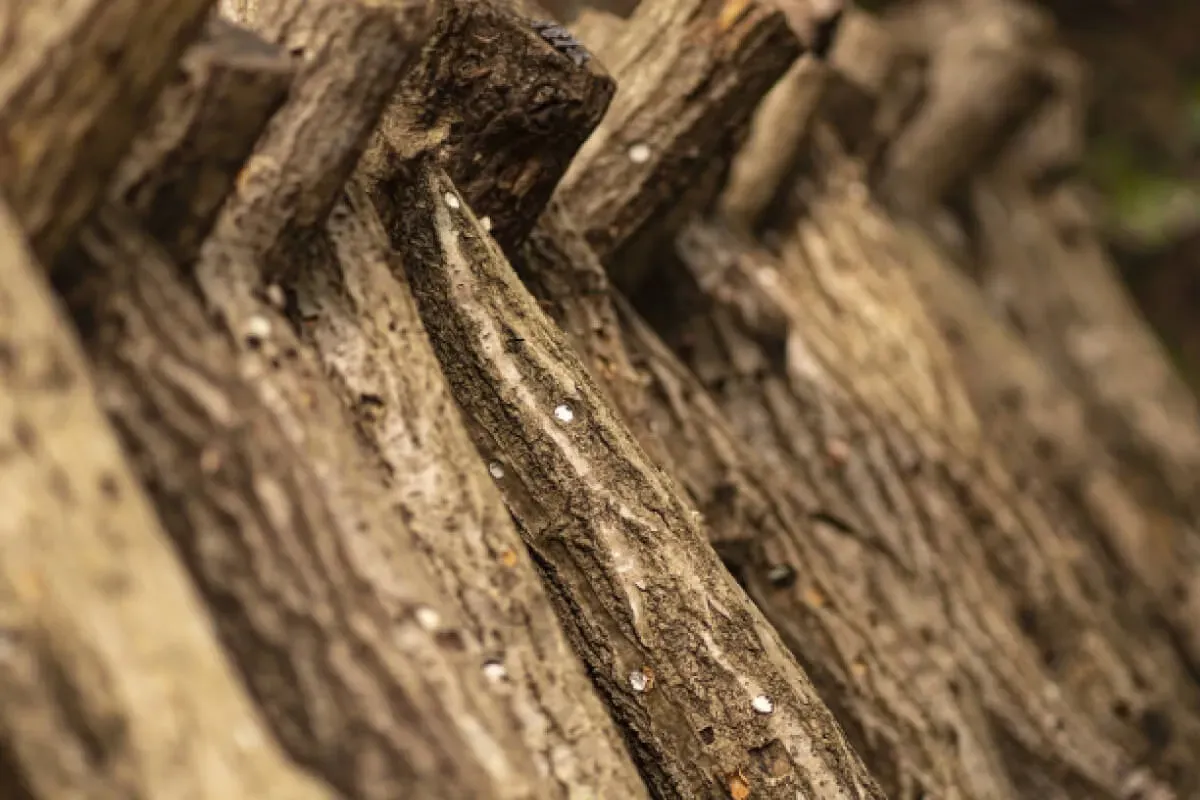
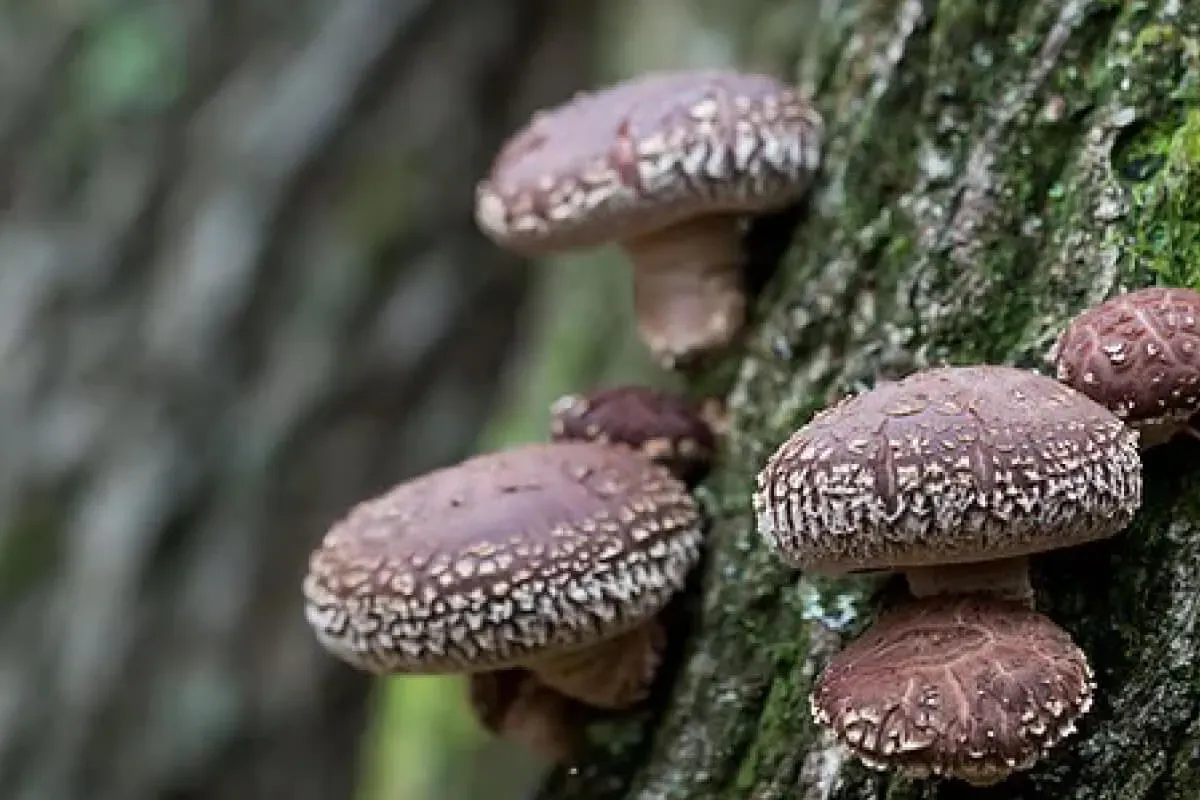
Modern shiitake production is dominated by substrate cultivation, which is easier to manage and yields more. TAKEHISA has worked since its founding with log-grown shiitake: spawn driven into felled kunugi oak and left to the weather. It takes about two years instead of a few months, the labor is heavy, and the number of growers is falling, which is steadily making it a scarcer ingredient.
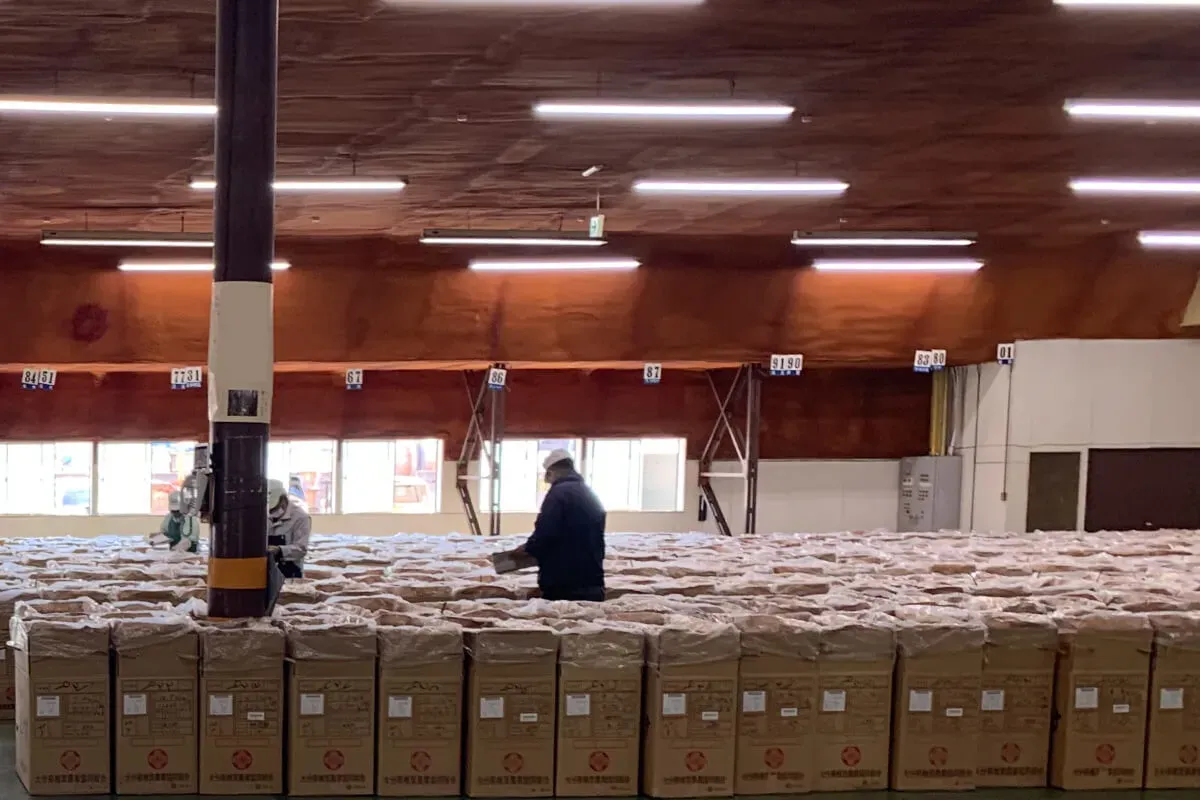
Oita and Kumamoto produce the highest-regarded dried shiitake in Japan, and bidding rights at their auctions are hard to obtain. TAKEHISA holds bidding rights in both through long-standing relationships, which is what keeps the quality it buys consistent year to year.
Spawn goes into the log in winter. The first harvest comes about two years later.
Guanylate, and why drying is what creates it.
Guanylate is one of the three major umami compounds, alongside inosinate from bonito and dried sardine and glutamate from kelp and cheese. Dried shiitake is the richest common food source of guanylate, and combining it with a glutamate source multiplies the perceived umami rather than adding to it.
Shiitake is low in calories and carries vitamins, minerals, and dietary fiber. Drying increases the dietary fiber, vitamin, and mineral content by a wide margin, and raises vitamin D in particular. The flavor is not limited to Japanese cooking: the concentrated savory character carries into soups, risotto, sauces, and plant-forward menus across cuisines.
Cold water, in the refrigerator, and time.
Umami content turns out to be roughly the same across grades. What a higher grade buys is aroma, appearance, thickness, and bite, which together make up the eating quality.
Dried shiitake picks up moisture from the air. Move it into a sealed container with the desiccant that came in the bag, and keep it out of direct sunlight somewhere with air movement. Sealed and refrigerated it keeps for a long time, but the printed shelf life on the bag is what to work to.
If a stored batch does go soft, spread it gills-up on a rack on a clear day and leave it in direct sunlight for about two hours. It dries out again, and the ultraviolet exposure raises the vitamin D.
Accounts differ, but the outline is well documented.
Tell us your market, business type, intended use, quantity range, and the documents you need. TAKEHISA will review your inquiry and confirm the available next steps.